

Tech tip2 min read
Long-Term Microfilm Storage Tips for Archive Vaults
Standards requirements and common mistakes in archive vaults that put long-term microfilm records at risk, with ANSI/AIIM and ISO references.
Visits to archive vaults have shown that certain problems and misconceptions repeatedly put vital records at risk. This guide summarizes standards requirements and common mistakes to keep information permanent.
Highlights
- The original camera negative of permanent records should never be used for reference and must be stored in a fire-resistant vault (ANSI/AIIM MS48-1990 section 7.1)
- For reference, make a limited number of working copies on Diazo, Vesicular or Silver film
- Relative humidity no more than 40 percent and temperature no more than 70º F, with variation of less than 5 percent RH or 5º F in 24 hours (MS48-1990 section 8.4)
- Diazo and Vesicular films should not be stored in the same cabinet as silver films (MS23-1998 section 15.6)
- Inspect master films annually to detect chemical deterioration early (MS23-1998 section 16)
Sources of airborne oxidants
Under ANSI/AIIM MS23-1998 section 15.4, oxidants are the main cause of microblemish (redox) formation on silver microfilm. Common sources:
- Ozone from copiers and fresh oil-based paint
- Cleaning agents, construction adhesives and cosmetics
- Engine exhaust fumes
- Deteriorating paper and low-quality cellulose products, including acetate film with vinegar syndrome
- Adhesive tape, rubber bands, ink, glue and textiles
Common problems in storage vaults
- HVAC system with insufficient capacity and filters not changed monthly
- Boxes stored in unsuitable enclosures (cardboard, wood, metal and plastic) or boxes without Acid & Lignin Free certification
- Incorrect settings and fluctuating temperature and humidity
- Plywood-paneled walls, carpeted floors and fresh painting without removing the film
- No air exchange and no positive pressure
- Contaminated film or Diazo stored next to fresh silver film
- Cabinets less than 6 inches above the floor
- Dirty environment, signs of insects and rodents, and mold growth
- No fire suppression system and untrained staff
- Molecular Sieves not used in every roll
- No polysulfide treatment such as Kodak Brown Toner
- Non-silver copies kept instead of masters, and masters used for reference
Reference standard
ISO 18911:2000(E) section 7 requires that the temperature and humidity conditions recommended in Table 1 of the standard be maintained inside the storage enclosures or rooms.
Source:Eastman Park Micrographics(epminc.com)(opens in a new tab)
Frequently asked questions
Where should the original camera negative of permanent microfilm records be stored?
The original camera negative of permanent records should never be used for reference and must be stored in a fire-resistant vault.
What are the allowed temperature and humidity conditions for microfilm storage?
Relative humidity must be no more than 40 percent and temperature no more than 70º F, with variation of less than 5 percent RH or 5º F in 24 hours.
Why should Diazo and Vesicular microfilms not be stored with silver microfilms?
According to ANSI/AIIM MS23-1998 section 15.6, Diazo and Vesicular films should not be stored in the same cabinet as silver films.
What is the main cause of microblemish formation on silver microfilm?
According to ANSI/AIIM MS23-1998 section 15.4, airborne oxidants are the main cause of microblemish formation on silver microfilm.
How often should master microfilms be inspected?
Master films must be inspected annually to detect chemical deterioration early.
Attachments
Comments
No comments yet. Be the first to share your view.
Leave a comment
More to read
Tech tip · Dental Imaging
Planmeca ProMax Cephalostat with ProTouch User's Manual
User's manual for the Planmeca ProMax Cephalostat with ProTouch touchscreen, for accurate head positioning and cephalometric imaging on 2D and 3D ProMax units.
Planmeca
Tech tip · Dental Imaging
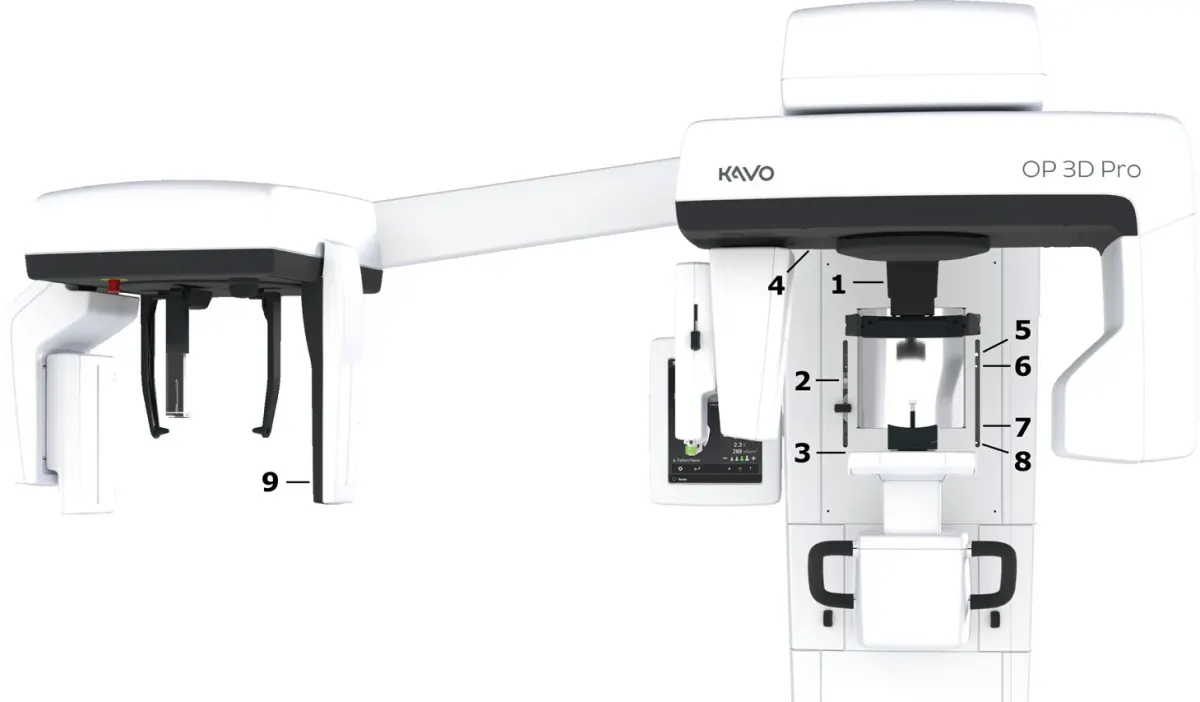
ORTHOPANTOMOGRAPH OP 3D Pro User Manual
User manual and technical specifications for the OP 3D Pro digital dental imaging system with panoramic, cephalometric and Cone Beam 3D programs.
Instrumentarium Dental
Tech tip · Microfilm
Tech Tip 91: Choosing the Correct IMAGELINK Product
IMAGELINK camera, duplicating, Archive Writer and COM films and processing chemicals grouped by equipment and application, with catalog numbers.
Eastman Park Micrographics