

 Imaging Software
Imaging Software
SmartXR™ Intelligent Workflow
- Model
- SmartXR Intelligent Workflow
- Brand
- Agfa
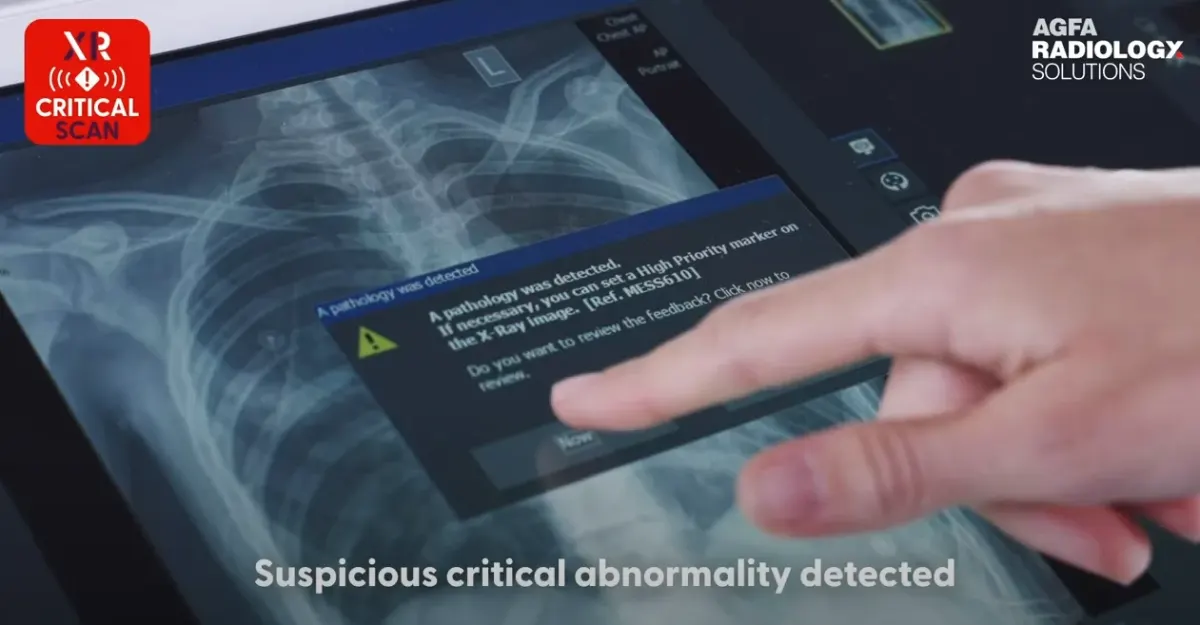
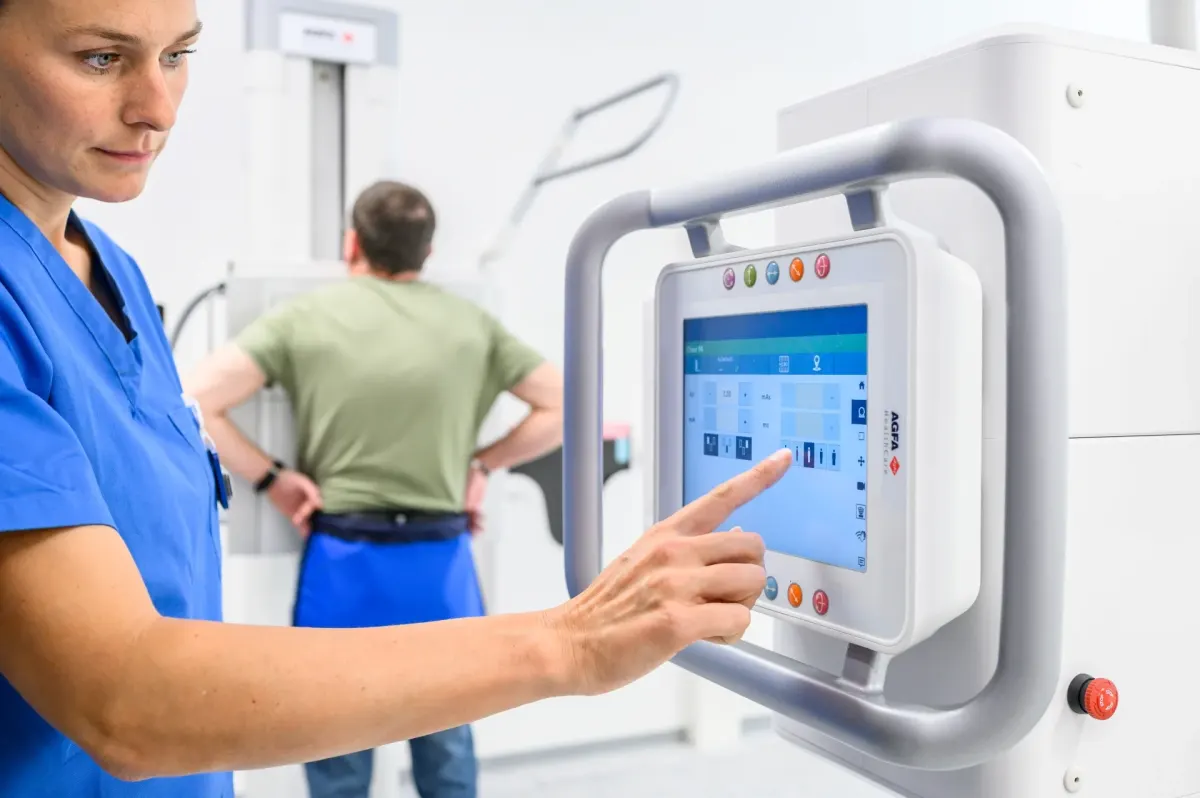
Sensors and AI to improve usability and help prevent human mistakes in X-ray imaging.
Key features
- SmartRotate™: automatic correction of image orientation
- SmartAlign™: real-time tube-to-panel alignment assistance
- SmartPatientView™: a picture of the collimation area archived in PACS
- SmartPositioning QA™: positioning quality check at the operator’s fingertips
- SmartDose™: dose adapted to patient thickness
- SmartPositioning™: live visualisation of collimation and AEC areas
- LiveVision™: live camera view of the collimation area
Description
Sensors and AI to improve usability and help prevent human mistakes.
SmartRotate™: automatic correction of image orientation
Focus on the patient
Which side of the panel is pointing up does not matter anymore: SmartRotate™ automatically presents the image ready for viewing.
Reduce stress
With multi-trauma patients in emergency, radiographers can acquire X-rays faster and shorten the interruption of the clinical team.
Save time
More than 20 hours of bedside imaging workload savings per machine annually.
SmartAlign™: real-time tube-to-panel alignment assistance
Improve image quality
Helps the radiographer during tube angulation to avoid grid cut-off artifacts, shape distortion and unintended spatial distortions.
Facilitate follow-up
Accurate tube angulation improves image consistency, which helps radiologists compare an X-ray image with its priors.
SmartPatientView™: archiving a picture of the collimation area in PACS
Check patient positioning
Visualising the collimation area enables the radiologist to check whether the body part and the positioning are correct.
Soft tissue condition
The positioning picture gives the radiologist additional information on body condition, e.g. swelling, bruises, wounds.
External foreign objects
The radiologist can check whether tubes, lines, buttons, hair, etc. were visible at the time of exposure.
Evidence of abuse
Archived pictures can provide evidence of violent treatment of the patient.
SmartPositioning QA™
With this feature the operator can validate the image for diagnostic positioning quality, ensuring accuracy and confidence. It is a quality assurance tool at the operator’s fingertips to:
- avoid non-diagnostic X-ray images due to suboptimal positioning
- fill radiographers’ knowledge gaps, on demand
- standardize X-ray images across the team
SmartDose™: adapting dose to patient thickness
Better image quality for bariatric patients
When AECs are not available to adapt the dose automatically, the radiographer gets assistance to increase the dose for overweight patients.
Easier follow-up
Even if the patient’s weight has changed, a dose tailored to patient thickness is proposed to the radiographer before exposure. The number of exams repeated due to sub-diagnostic image quality is reduced.
SmartPositioning™: live visualisation of collimation and AEC areas
Reduced retakes
Accurately positioning the collimation area can be difficult, especially with obese patients or for lateral views. With SmartPositioning, the radiographer can remotely check whether the collimation area is correct and the AEC fields are properly covered before triggering the exposure.
Faster positioning
Immediate assistance to the radiographer with real-time overlays of the patient on the tube head display.
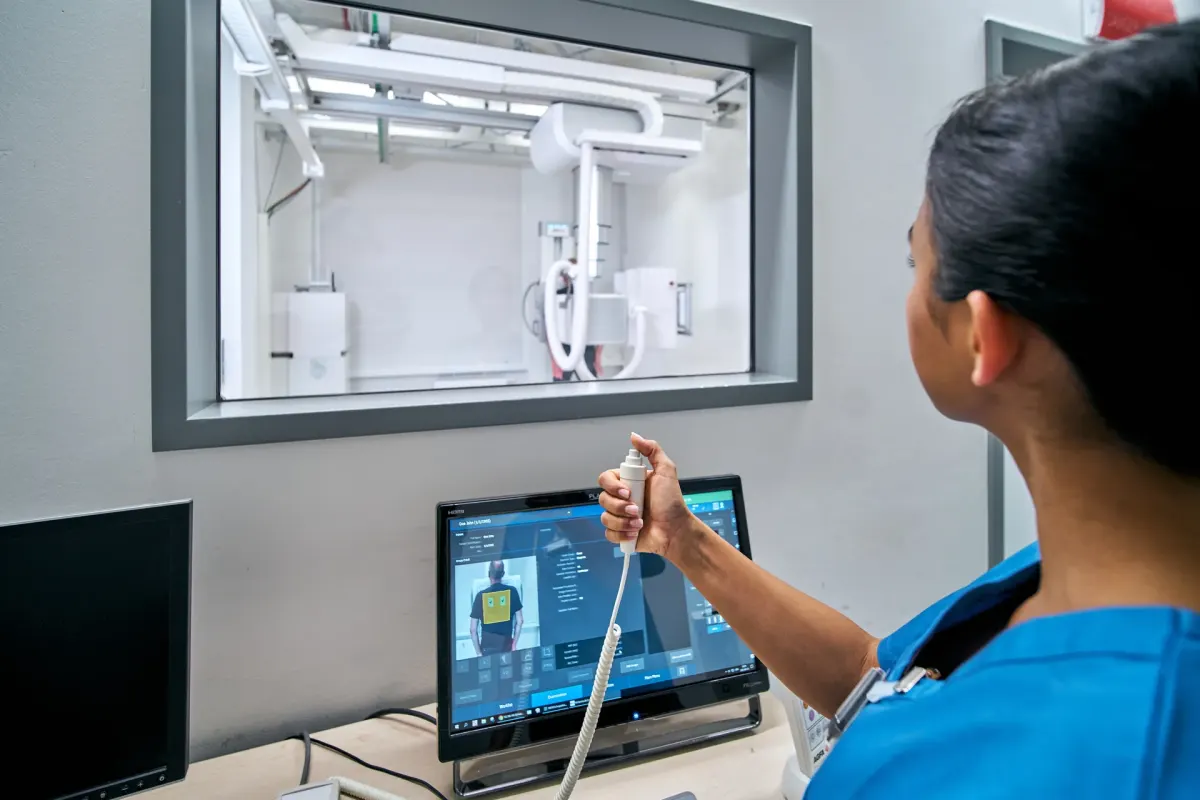
LiveVision™: live camera view of the collimation area
Avoid retakes
Remotely from the workstation, the radiographer can make a last check that patient positioning is still correct before exposure, and guide the patient to correct unintended movements.
What our customers say
“Although we have three X-ray rooms, we now perform about 80% of our images with the DR 600, and it takes less time than before. That means we can see more patients, while keeping their experience fast and smooth. The DR 600 and SmartXR are an excellent solution for a busy hospital that wants to invest in the best technology for patient care.”
“If you have people with less training, technology can help them get the correct positioning or avoid retakes. It can support them to make sure that the image is consistent, with a good dose. Technology like SmartXR can offer the solution for this.”
“SmartXR has fine-tuned some of our examinations. When we leave the room to go behind the screen, we can still see the patient via the camera. If we see them move, we can correct this before we do the exposure, saving the patient a dose of radiation.”
Downloads
Related products
- Imaging Software
 Imaging Software
 Imaging Software
 Imaging Software
Related knowledge
View allNews · Imaging Software
Istituti Fisioterapici Ospitalieri, in Rome, Italy, renews and upgrades its AGFA HealthCare Enterprise Imaging system with integrated AI, advanced post-processing tools, and AWS Cloud.
IFO in Rome, Italy, renews and upgrades its AGFA HealthCare Enterprise Imaging system with integrated AI, advanced post-processing tools, and AWS Cloud.
3 min readAgfa
News · X-ray Systems
Transforming Radiography Services at NHS Lothian with Agfa’s DR 600 X-ray room
Modern imaging departments need technology that not only delivers exceptional image quality but also supports staff efficiency and patient care. At NHS Lothian’s Royal Infirmary of Edinburgh, the tran...
2 min readAgfa

News · Imaging Software
AGFA HealthCare at MILO (OARM) 2026: Empowering Canada’s Imaging Transformation
AGFA HealthCare will showcase how its intelligent design approach is shaping the future of imaging technology.
3 min readAgfa