

Tech tip1 min read
Things to Know About Microfilm Resolution
What microfilm resolution means, how it is read under ANSI/AIIM MS23, what affects it and how much loss is acceptable per generation.
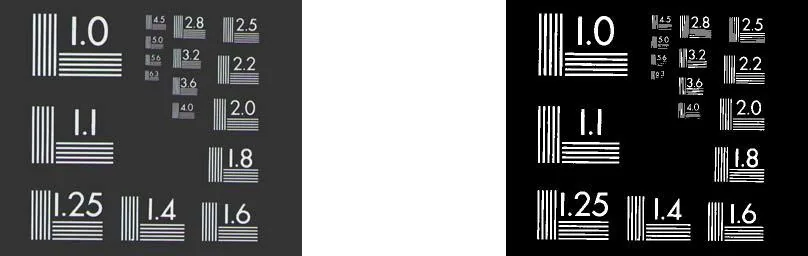
Resolution is the ability of optical systems and photographic materials to render fine detail of an object, and it is a subjective measure of the finest detail a micrographic system (camera, film and processing) records.
Highlights
- Under ANSI/AIIM MS23-1998 section 7.2, the inspector determines under a microscope the smallest pattern in which all five lines can be resolved in both horizontal and vertical directions
- Always use an original resolution target, not a copy
Factors affecting resolution
- Contrast of the original document or target
- Poor document or target quality (wrinkled, torn or dirty)
- Environmental conditions (temperature and humidity)
- Imaging system (out of control, dirty optics, poor mechanical performance)
- Insufficient contact between master and duplicating film during duplication
Resolution loss
There is always some loss of resolution from one generation to the next. The maximum loss should not exceed one pattern per generation (film to film or film to paper).
Source:Eastman Park Micrographics(epminc.com)(opens in a new tab)
Frequently asked questions
What is resolution in micrographics?
Resolution is the ability of optical systems and photographic materials to render fine detail of an object, and it is a subjective measure of the finest detail a micrographic system (camera, film and processing) records.
How is resolution determined under ANSI/AIIM MS23-1998?
Under ANSI/AIIM MS23-1998 section 7.2, the inspector determines under a microscope the smallest pattern in which all five lines can be resolved in both horizontal and vertical directions.
What factors affect resolution?
Contrast of the original document or target, poor document or target quality (wrinkled, torn or dirty), environmental conditions (temperature and humidity), imaging system (out of control, dirty optics, poor mechanical performance), and insufficient contact between master and duplicating film during duplication.
Should an original resolution target be used?
Always use an original resolution target, not a copy.
What is the maximum acceptable resolution loss per generation?
The maximum loss should not exceed one pattern per generation (film to film or film to paper).
Attachments
Comments
No comments yet. Be the first to share your view.
Leave a comment
More to read
Tech tip · Dental Imaging
Planmeca ProMax Cephalostat with ProTouch User's Manual
User's manual for the Planmeca ProMax Cephalostat with ProTouch touchscreen, for accurate head positioning and cephalometric imaging on 2D and 3D ProMax units.
Planmeca
Tech tip · Dental Imaging
ORTHOPANTOMOGRAPH OP 3D Pro User Manual
User manual and technical specifications for the OP 3D Pro digital dental imaging system with panoramic, cephalometric and Cone Beam 3D programs.
Instrumentarium Dental
Tech tip · Microfilm
Tech Tip 91: Choosing the Correct IMAGELINK Product
IMAGELINK camera, duplicating, Archive Writer and COM films and processing chemicals grouped by equipment and application, with catalog numbers.
Eastman Park Micrographics